| title.alternative | : Ham Phra Dam Nam, Hae Luang Po Ham Yat, Hae Luang Po Phra Thong |
|---|---|
| event date.month | : April |
| event date.lunar month | : waning 15th, month 5th, or in a leap year waning 14th, month 5th |
| location | : |
| province / region | : Central : Phetchabun |
| subject | : fertility rites,calendrical rites,festive rites/rites for social auspiciousness |
| relations | : |
| keywords | : Ham Phra Dam Nam, Luang Po Ham Yat, Ban Pa Daeng, Pa Daeng Reservoir |
| creator | : Thirawat Seankham |
| date.issued | : 19 Sep 2017 |
| date.last updated | : 11 Oct 2018 |
Many people are confused about the 2 old folk traditions, the Ham Phra Dam Nam and the Oom Phra Dam Nam, as being the same. The former is a very well-known one of Phetchabun Province. The 2 traditions are different ones, but are both observed in Phetchabun.
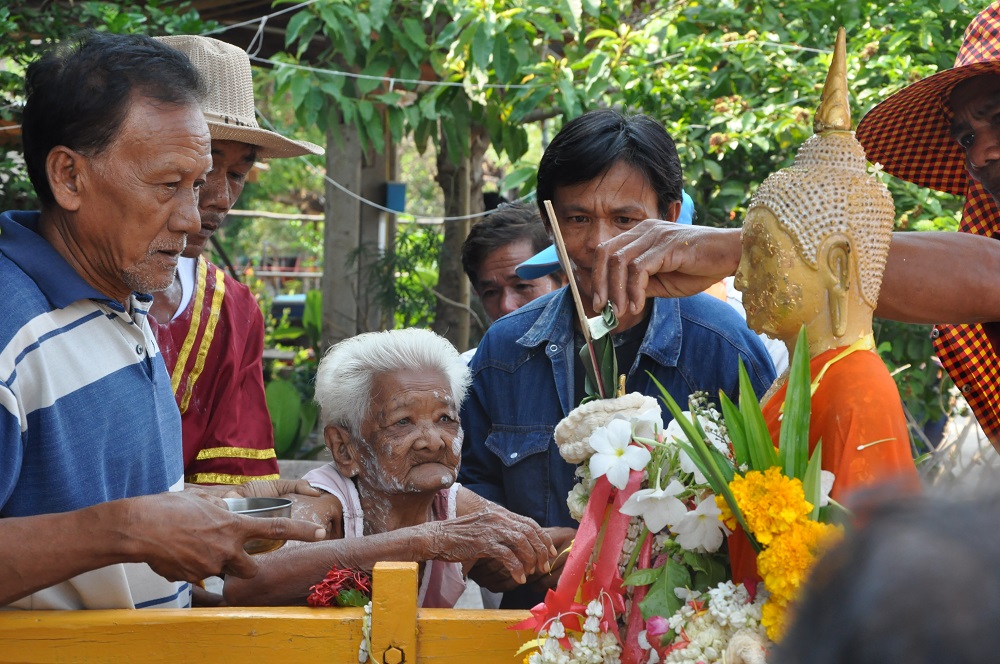
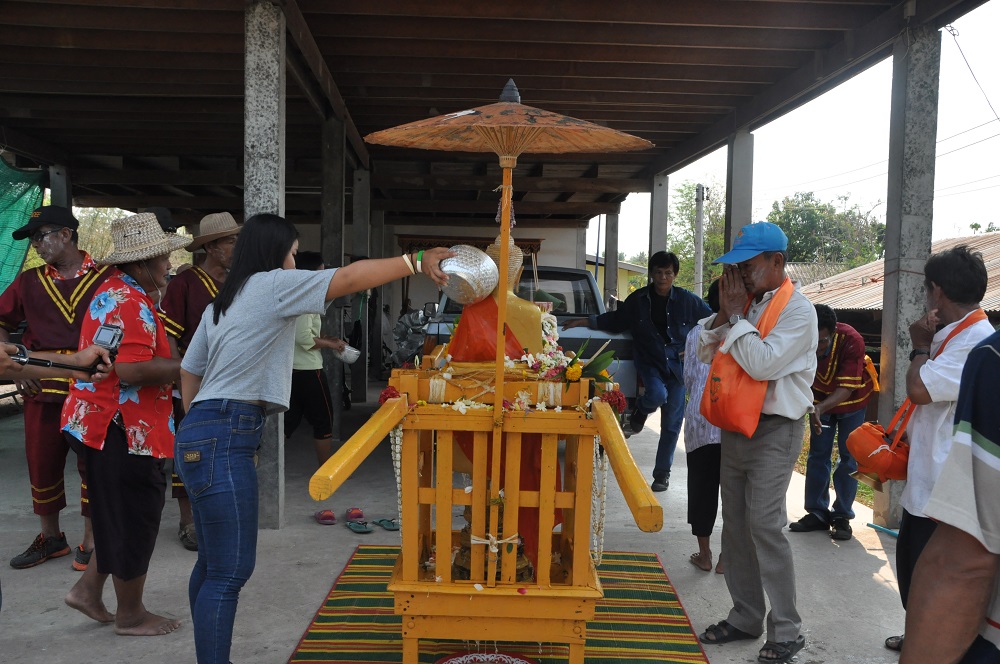
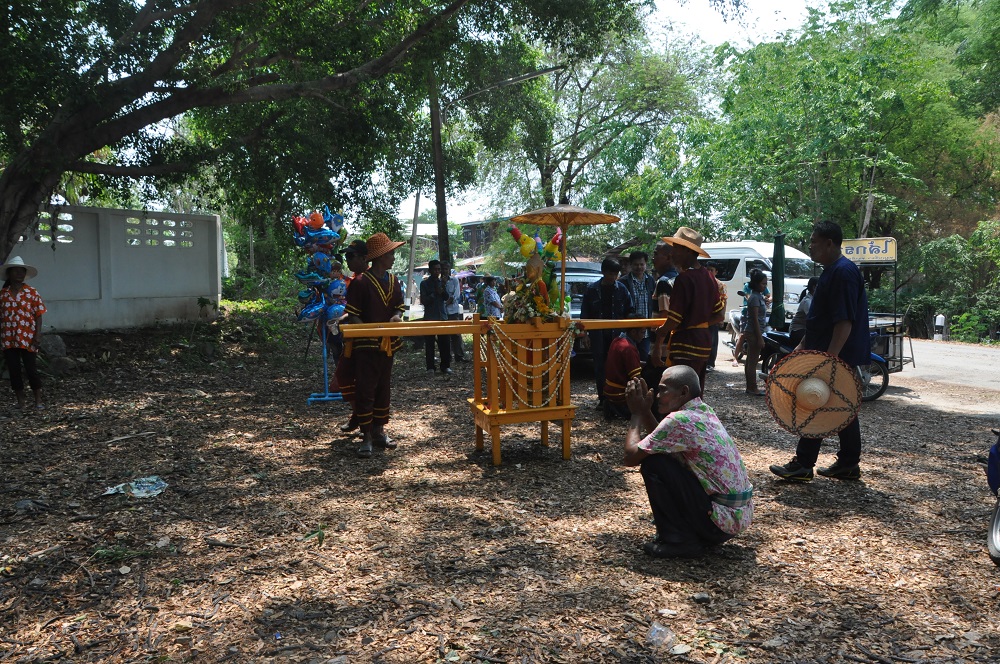
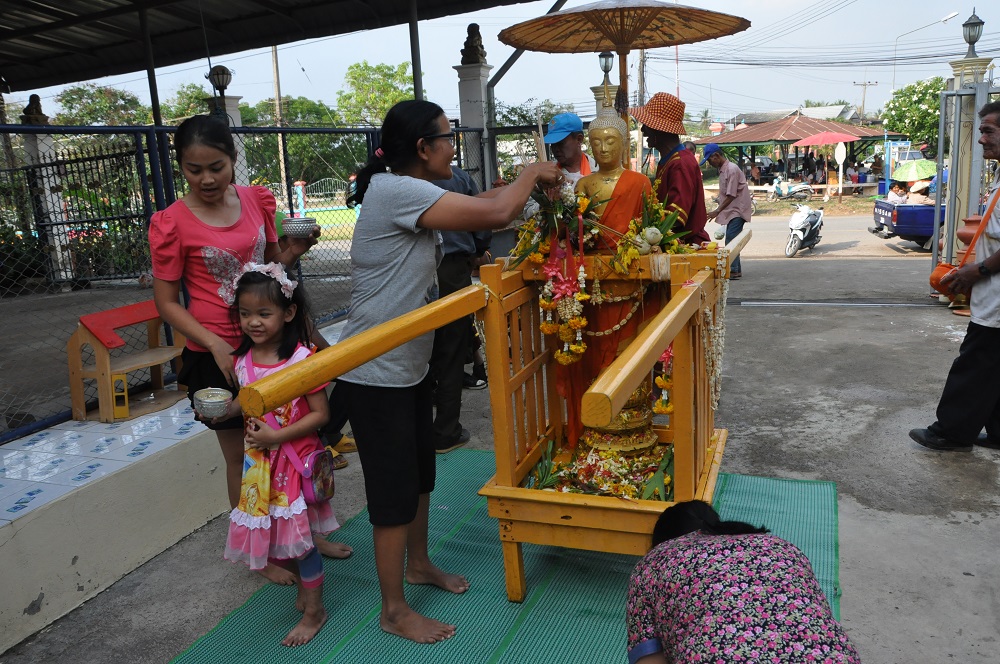
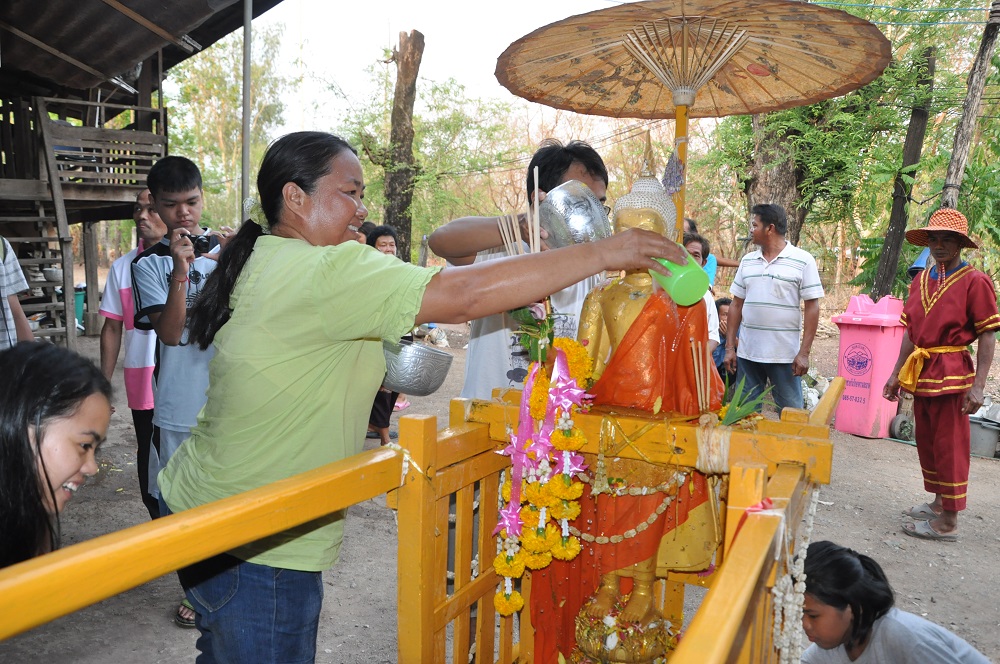
The festival, Ham Phra Dam Nam (Dive the Buddha Image into the Water) is about the mounting of a revered ancient image Luang Po Ham Yat (in the posture of “Persuading Relatives Not to Quarrel” from Wat Po Klang in Ban Pa Daeng), on a carriage to be carried around town by some male locals. Buddhist devotees along the way worship the image by pouring fragrant water on the body. The image, after that, is to be immersed in the Pasak River. This annual event takes place on waning 15th in the 5th lunar month. In a leap year, it is held on waning 14th in the 5th month instead.
A standing Ayutthaya-style image, Luang Po Ham Yat is 1.20 meters tall and 50 kilograms in weight, balanced on a lotus-leaf base. The left arm is at the side of the body. The right arm is raised to the chest level. The palm is open and erect showing a gesture of “Persuading Relatives Not to Quarrel.” The fingers are not of the same length. The face has an oval shape, with long ears, curved eyebrows, a curved nose, thin lips with a slight smile, a twisted chin, spiral hair tufts on the head, and no hairline. The flame-shaped aureole can be removed (said to have been adorned with some precious stones but later stolen and replaced with something else). The long robe clings to the body with its lower part spreading out sideway.
The image is also known as Luang Po Thong. Around 1966, a new abbot from Pathum Thani arrived and undertook some renovations of the temple while the new ubosot/ordination hall (the present one) was being built. The new abbot saw some damages on the image. It was then repaired and given a new coat of gold paint, which made it look like a real solid gold image, hence the new name “Luang Po Phra Thong” (thong – gold).
How the tradition of immersing the Buddha image in the water was originated is not really known. What is true is that the practice has been observed by Ban Pa Daeng folks through generations. There was a story about a Buddha image which was spotted floating in the Pasak River, in front of Wat Trai Phum in the Mueang Phetchabun. The image was taken up and installed in the temple. Then on one Buddhist holiday, the image was seen like crying, with some tears coming down from the eyes. For fear that this could be a bad omen, the residents consulted a medium and were told that the image was crying because it wished to be installed upstream beyond the Pasak River source, or “nua nam.” This “nua nam” spot was interpreted to be Ban Pa Daeng, which lies to the west of Phetchabun town. Water in a town canal Huai Pa Daeng does flow into the Pasak River. Some Ban Pa Daeng villagers were therefore asked to come over and help out. They paid respect to the image and made a wish – if the image was supposed to stay in their village, then they would be granted the permission to lift it up easily. The wish was granted. They were able to move and put the image conveniently in a basket which was then carried to Wat Po Klang in Ban Pa Daeng.
But again while engaging themselves in some merit-making activities, on waning 15th of the 5th month, some Ban Pa Daeng folks happened to see tears coming down the image’s eyes again. They held a meeting, consulted a medium, and decided that the image wished to be bathed ritually. Since then, the bathing rite takes place every year, on waning 15th in the 5th month. Believers make a small wooden carriage to transport the image, and paraded it around in the village before it is taken to “dive,” or to be immersed in the water, at a deep spot, known as Wang San, in the Huai Pa Daeng Canal that flows into the Pasak River. Near this whirlpool bank stand a rock cliff and a Pu-Ya (Grandpa – Grandma) spirit house, much revered by the Ban Pa Daeng folks as being the protectors of their village. The area thus came to be known as Wang San (Whirlpool Shrine), or Wang San Chao Pu.
Later the new Huai Pa Daeng reservoir was constructed, causing Wang San to become just a shallow part of the canal. The water was too shallow for the Ham Phra Dam Nam. Consequently, the reservoir has been chosen to be the ritual venue instead.
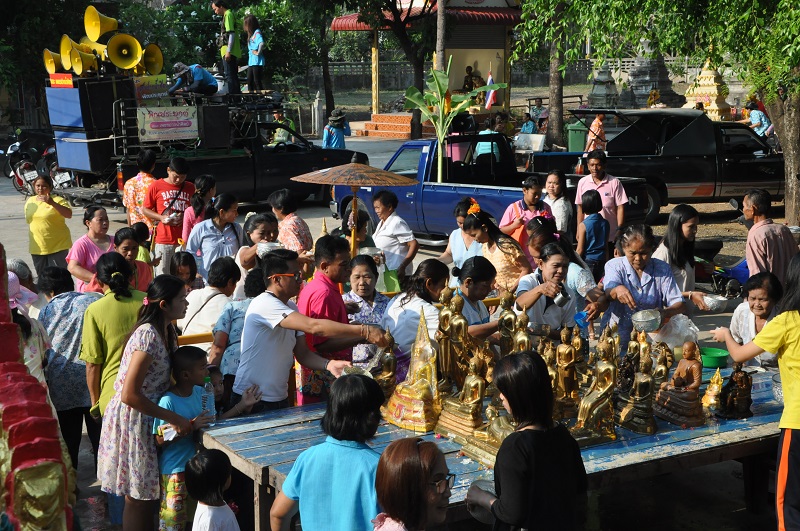
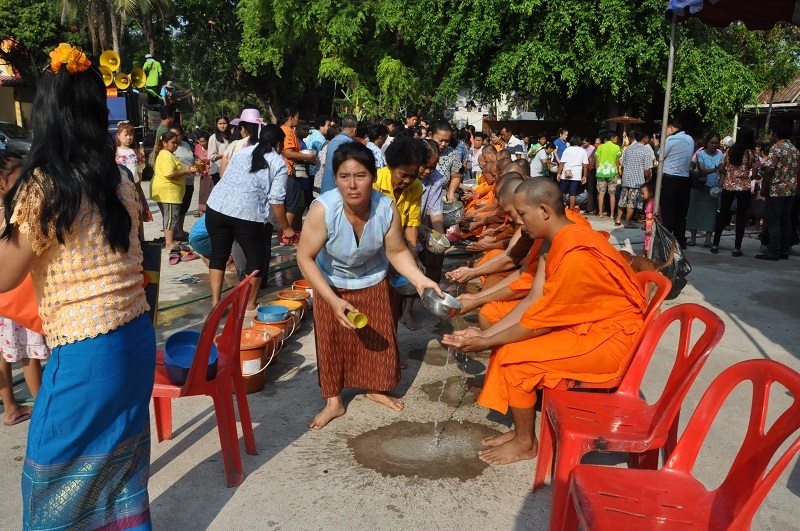
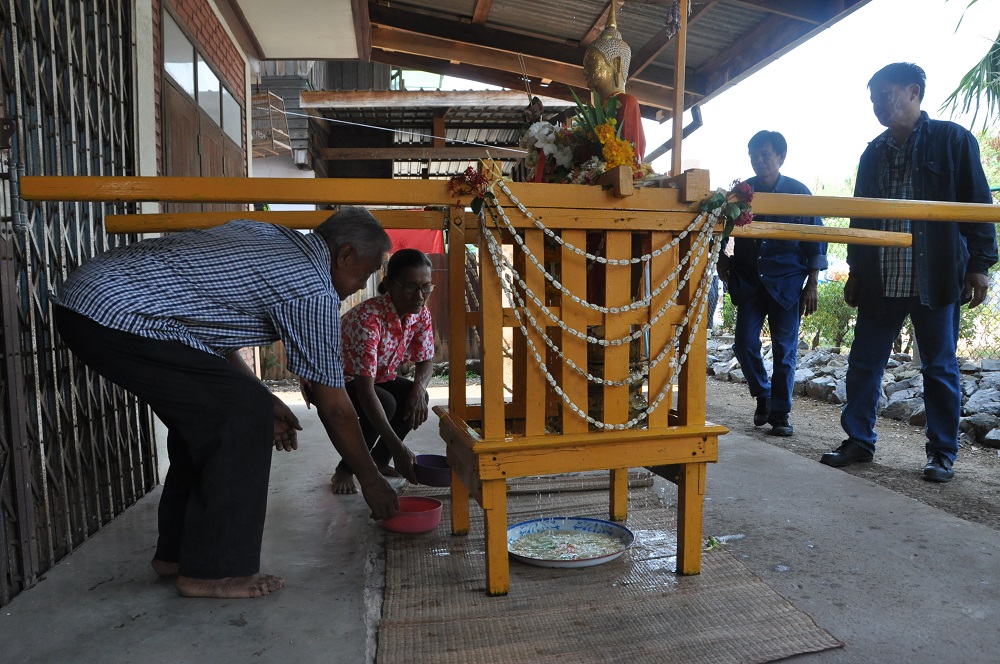
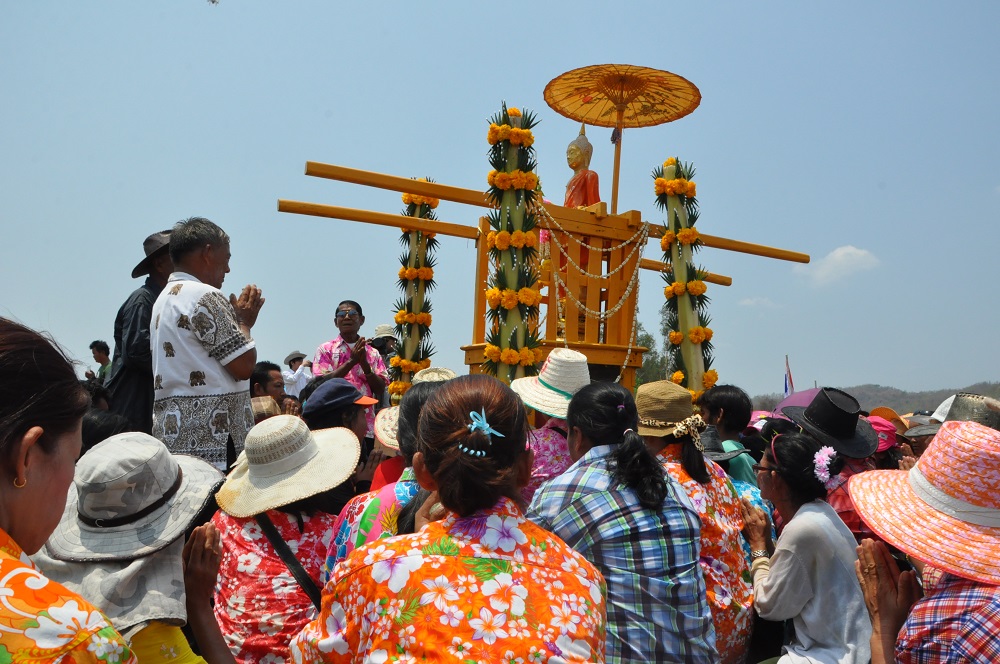
The activities started early on waning 15th in the 5th month, at Wat Po Klang. Devotees offered alms of dried food and a morning meal to the monks. Then everybody sat down to eat breakfast together. After breakfast, they invited Luang Po Ham Yat to be staged on the carriage. They tied sacred strings around to balance the image firmly. Then they put a pair of banana leaf cones containing betels on the hand of the image, and secured it with some holy strings again. Believers did the bathing rite by pouring scented water on the body. They also collected the water dripping down the sacred image. This water, considered holy, was to be taken home.
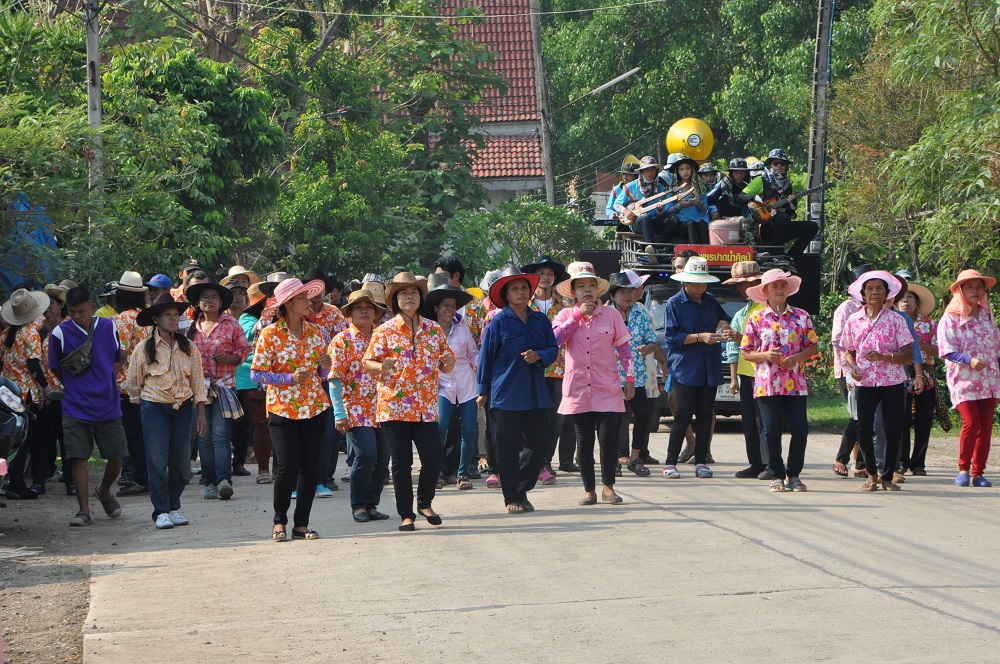
After the bathing rite, the image was paraded around the village. In the past, the parade would be led by a local marching music band of the long drums and the pi tae (Isan oboe, typical in a tubkeng/local Phetchabun band). Later on people found the tubkeng rhythmic patterns not jovial enough, so they changed to having the long drums and the pi tae. Recently, a brass band has been added as well.
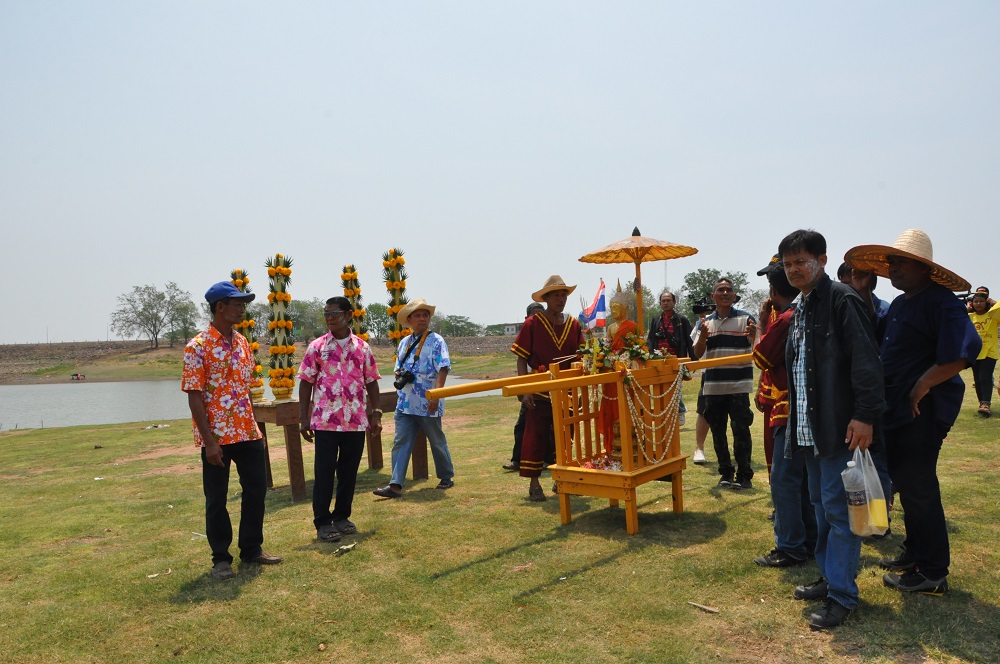
The paraders carried the image to visit the houses in the village. Anyone wishing to bathe the image right at their house needed to inform in advance the temple committee. At each house the carriers put down the carriage. The house members would come out to present flowers or flower garlands to the image. Then they bathed the image and collected the sacred water dripping down. Some asked to have the carriage put on their vehicles, then poured a pailful of water on the whole image. This is believed to bring safety and good luck to the vehicles. Some people gave food, refreshments and flowers to the carriage carriers too, as small gifts. Some blessed the family’s elderly members with the sacred water they had collected. Some indulged in more fun by throwing or splashing water at the paraders. Some opted to join the parade, which naturally got longer and longer. Arriving at Wang San, a few senior villagers went up to the shrine San Chao Pu – Chao Ya to inform the village spirits about the ritual about to take place, and to ask for their blessing. Carrying the carriage from house to house for almost 3 hours to the “diving” venue was quite a task for the men. At least 8 men were needed to take turns, even though the distance was just a few kilometers.
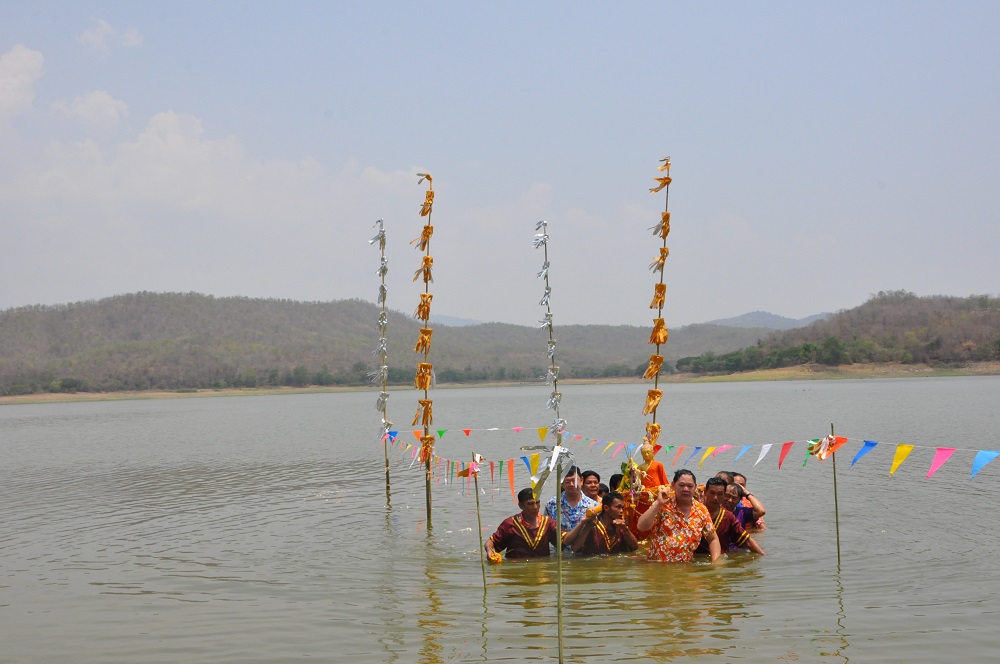
At the ritual site, the carriage was put down on a platform, the four corners of which were ornately decorated with 5-tiered bai si offerings and flowers. Ropes decorated with small banners were tied around the platform, stretching from there onto the ritual spot in the water, then around the four 7-tiered silver chatra/umbrella posts, which marked off the sacred venue.
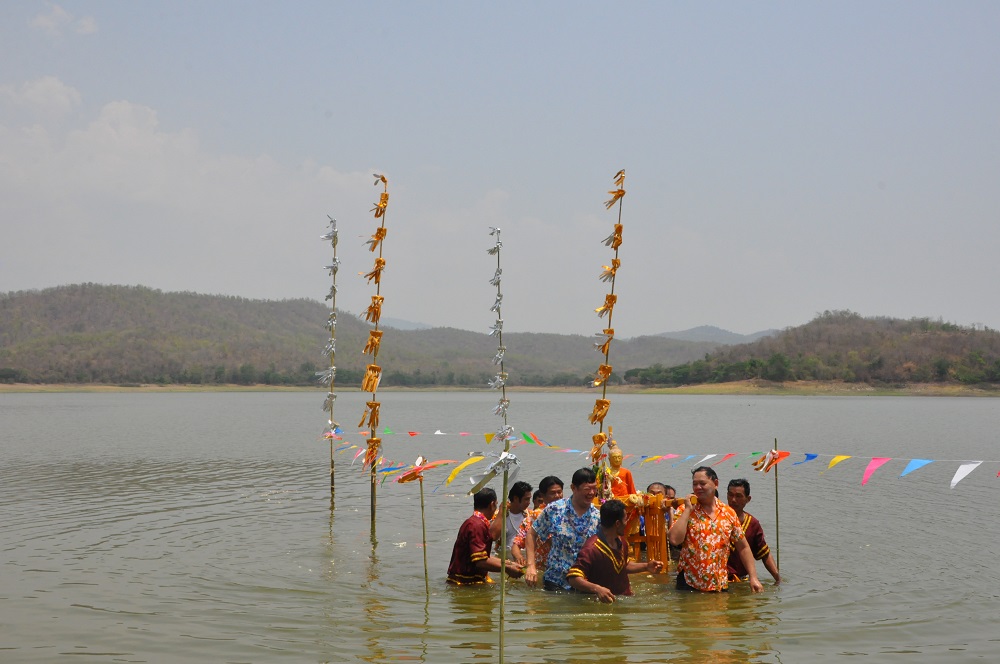
Before the ritualistic “diving,” all present there made a wish together. They prayed to the image to protect them and their village always. Next the male village representatives carried the image to be immersed in the water. They did it 3 times, each time making the same wish, while those ashore cheered to the loud beats of music. Then the image was brought back to the ritual platform, where it was bathed with tumeric and scented water. Local music was played, and the people danced 3 rounds around the revered image. The celebration thus ended.
Carrying the image back to the town took another 6-7 hours. It was not a direct trip back. They visited the rest of the houses not yet blessed. Devotees waited patiently in front of their houses in order to do the bathing.
Some were waiting at the temple because they wanted to collect the worship items: the sacred strings, the flowers, the incense and candles – from the image’s body and the carriage. These things would be kept for auspiciousness. Finally the abbot had the image installed back in the kuti/chamber. Those who missed the chance of venerating the image would have to wait for the next year when the image would be brought out again. This public worshipping takes place once a year only.
This tradition manifests the strong belief of Ban Pa Daeng folks that it is necessary to uphold the ritualistic practice of having their revered image bathed in the waterway. Failure to do so in any year would evoke punishments in the forms of droughts, severe damages to the grown crops, calamities and bad luck. The tradition obviously is the manifestation of this strong community faith and additionally a forceful source of unity among the folks.