| title.alternative | : Teh Krajad |
|---|---|
| event date.month | : August,September |
| event date.lunar month | : Waxing 15th, month 7th (Chinese lunar calendar) |
| location | : Wat Pananchaeng, Ayutthaya province : Tong Hua Huai Kwuang Association, the Chinese association of Suphan Buri |
| province / region | : Central : Phra Nakhon Si Ayutthaya : Suphan Buri |
| subject | : calendrical rites |
| relations | : |
| keywords | : Ting Krajad,Teh Krajad,Ting Krajad-Fa,Ting Krajad-Din,Suphanburi City Shrine |
| creator | : Supitcha Nukkong |
| date.issued | : 25 Feb 2016 |
| date.last updated | : 20 Sep 2017 |
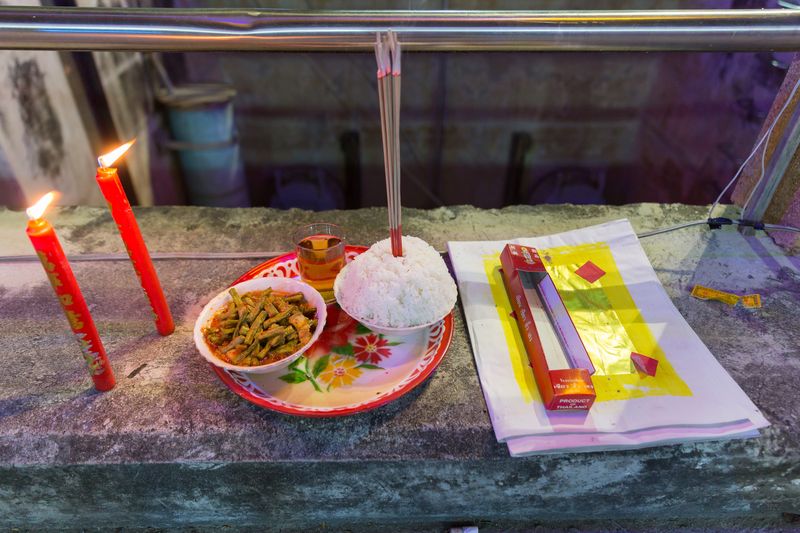
In Chinese culture the full moon day of the 7th lunar month is the time when ghosts and spirits, including those of the deceased ancestors, come out from the underworld to visit the living descendants. Traditional Chinese families will then pay homage to their ancestral spirits. They also believe that unknown, wandering ghosts who are also temporarily freed are starved because they have no kins. So, many families extend their piety to those homeless souls by offering them ritualistic offerings as well. The pious act is done in the afternoon of the Ghost Festival, in the 7th month. This “Pai Hor Hia Tee” ritual (Jittra Kornanthakiat 1968) of paying tribute to lost souls is done outside the house or in the house yard.
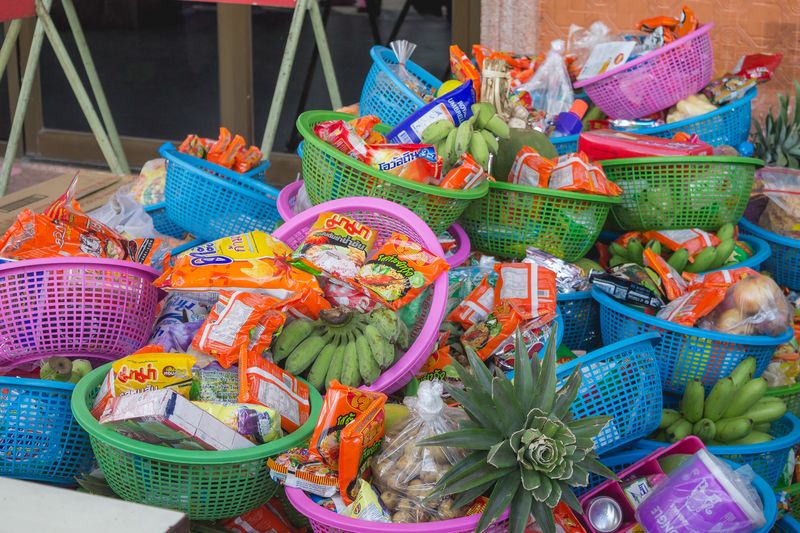
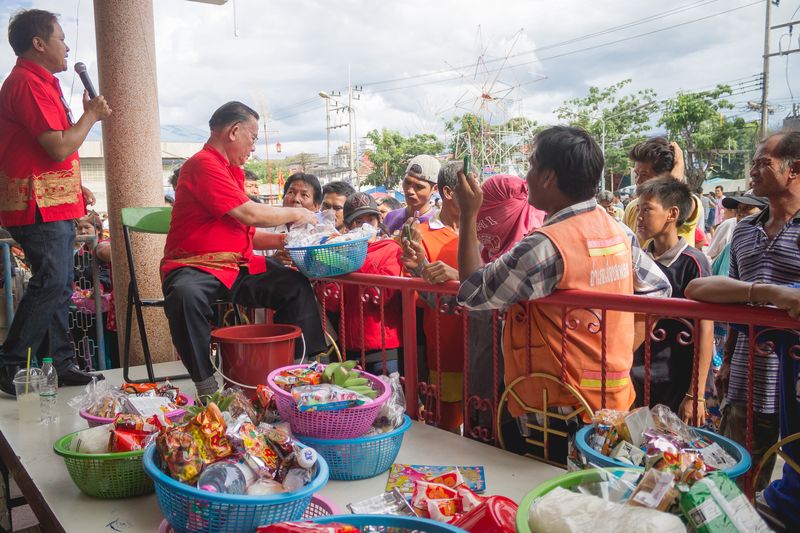
The Ghost Festival includes a large feast as well for the ghosts. The activities are done in some public places such as at temples, Chinese temples, or almshouses. The practice is known as “Ting Krajad” (literally leaving behind food baskets). It is conducted by a Chinese priest or a spirit medium. People give alms to hungry, homeless ghosts, and alms of food too to the hungry poor.
The tradition is basically a Chinese one. But in Thailand it is called differently and sounds like a Thai thing. Possibly it was derived from a Thai tradition of putting alms in “krajad” – flat, round wicker baskets, to be offered to the monks after they finish delivering sermons. This tradition can be traced back to the time of Vessantara, who was so compassionate as to give away everything he owned, there exemplifying the virtue of charity. In Chinese culture, alms to be distributed to the poor are put in wicker baskets fastened with bamboo strips. These baskets are called in Chinese “gow-tai”, which means baskets for alms. So the Thai name for this kind of merit-making is “ting krajad” which means leaving (alms) baskets behind (for the poor). (Setthapong Jongsa-nguan 2549: 104-105)
Ting Krajad tradition in Thailand
Though living in foreign lands, Chinese immigrants still adhere to their Chinese culture and ways of life. Overseas Chinese in Thailand do the same thing, for example, with regard to alms giving. Buddhists, whether of the Therassada or Mahayana Schools, believe in making merits by giving alms. The Chinese Ting Krajad tradition therefore does not conflict in any way with the Thai Buddhist cultural and religious practices, which have become so integrated with Brahmanism, supernatural beliefs, and folk religion (beliefs in spirits).
The Ting Krajad practice of donating food and necessary items to poor people is held in almost every province, particularly in those areas with a history of the Chinese immigration. The venue is generally a Chinese shrine, a Chinese almshouse, a charitable foundation office, or a Chinese association. Participants are not only those of Chinese blood but include Thai and other racial groups as well, due to some common religious beliefs that they share. This traditional Chinese Ting Krajad practice is therefore very similar to the Kuy Salak of the north, the Tan Khao Sak of the northeast, the Salakbhat of the central region, and the Tenth Month Sart of the south.
The very popular Ting Krajad which is done on a grand scale is those held at, for instance, Wat Phanan Choeng (Ayutthaya), Wat Sodhornwararam (Chachoengsao), Pho Teck Tung Foundation (Bangkok), and particularly at Tong Hua Huai Kwuang in Suphan Buri, which is organized by the provincial offices.
Ting Krajad Festival in Suphan Buri
Regarding the province’s Ting Krajad origin, legend has it that a Chinese in Suphan Buri found 2 stone slabs in a canal while fetching water for his vegetable plots. Afterward it was revealed that the patterned slabs could have been some ancient city pillars. A city pillar shrine therefore was built to house these sacred stones. In 1880, the area suffered a severe drought. The hardship prompted the people to seek relief from the City Pillar Spirit. Then the bad time went away, so the more they believed in the spirit’s benevolence. They therefore agreed to hold a big merit-making ceremony to pay tribute to their savior, and also on this same occasion, to give alms to the deceased ancestors’ spirits, other spirits and ghosts – 36 groups of them. To feed these hungry ghosts, food was tossed in all directions to the ground from a higher spot. The practice since then has become the tradition of Ting Krajad, whereby food is distributed by being left in wicker baskets for the poor to come and collect.
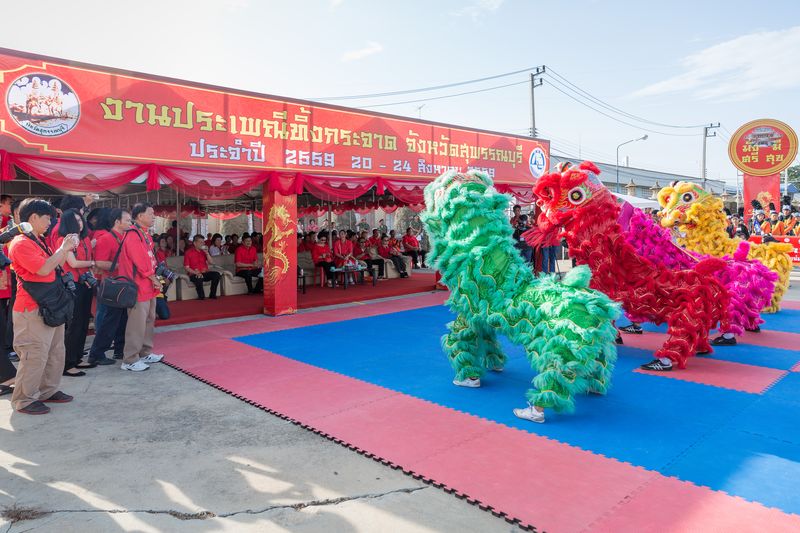
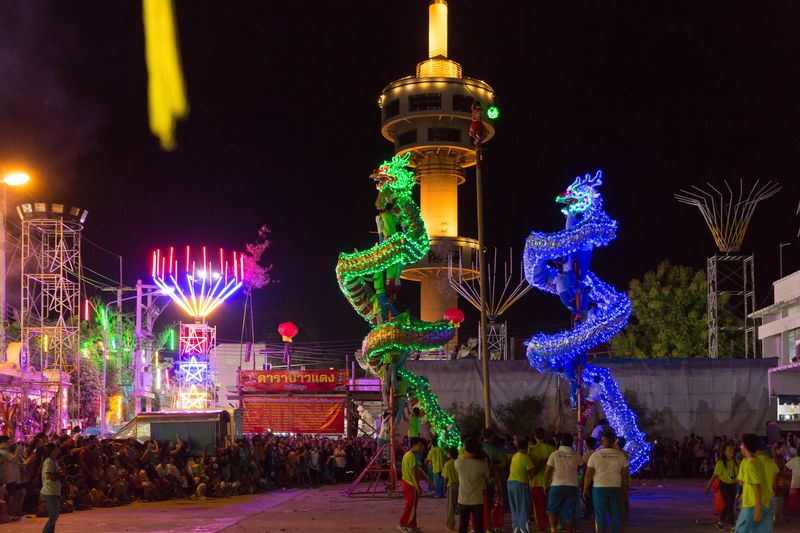
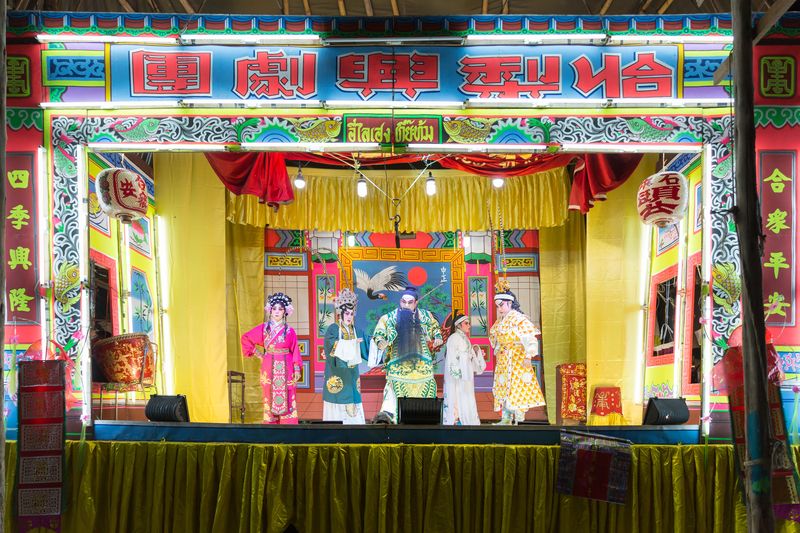
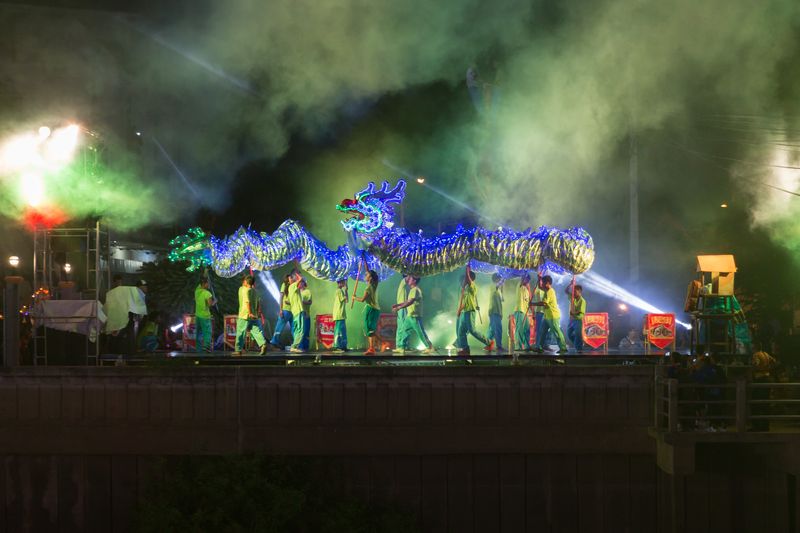
Suphan merit-making festival is held annually. It is actually an important traditional event of the province. Rituals associated with the City Pillar Shrine are jointly organized by the Province, Suphan Buri City Pillar Shrine Committee, the Tourism Authority of Thailand (TAT), the local Administrative Organization, and the private sector. The festival takes place 3 days after the Chinese Sart Day (Ghost Festival), consisting of 2 intervals. The Ting Krajad Fa is held for 5 days, and the Ting Krajad Din another 5 days. Throughout these periods, fun activities are available for the public including a market fair and live cultural performances, day and night. There are several types of Thai and Chinese public entertainment: Chinese opera, li-ke (Thai opera), movie shows, music bands, staged performances and many game contests. The festival is very popular. It attracts participants from nearby provinces as well.
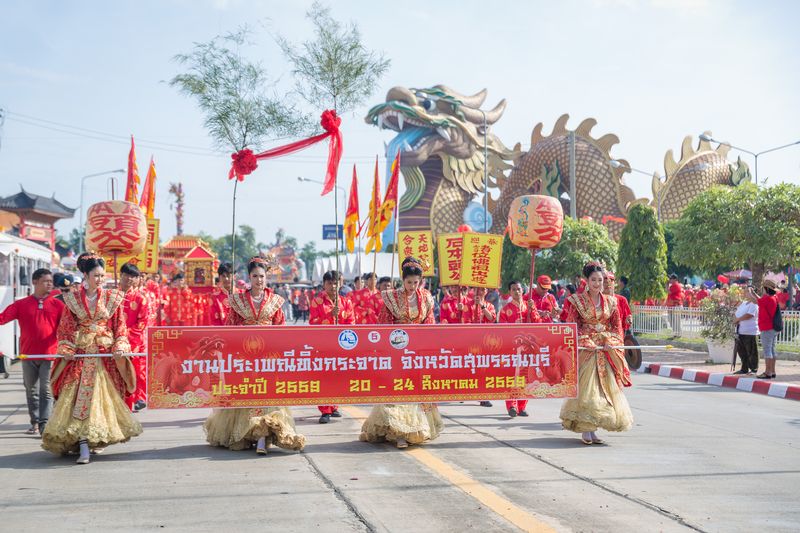
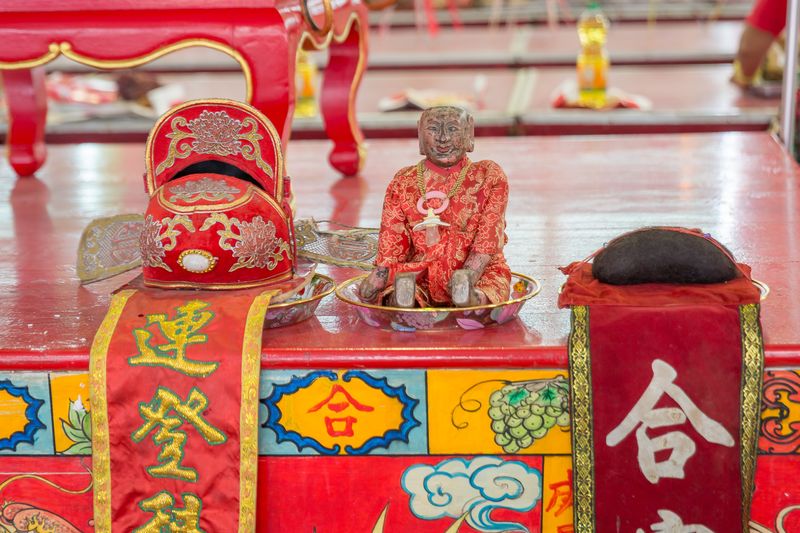
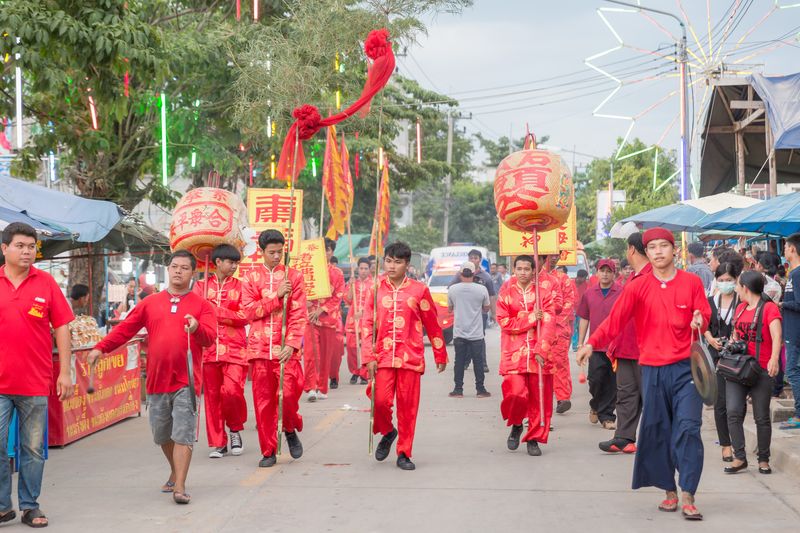
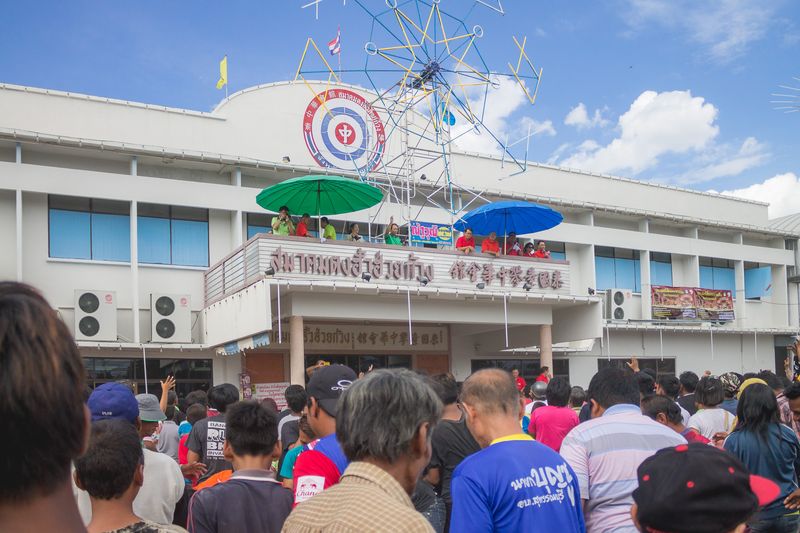
The festival is held in the city area. On the first day, it starts with a grand procession of the City Pillar Shrine Spirit/Guardian heading to the Ting Krajad venue, which is at the Tong Hua Huai Kwuang Association, the Chinese association of Suphan Buri. The City Guardian Statue, a reproduction copy, and incense burners from many other Chinese temples are invited ceremoniously to the Association. The important rituals are done mainly over here including the Tine Krajad Fa on the following days. The market fair and public performances also begin in the vicinity of the Association – on Pan Kam and Khun Krai roads.
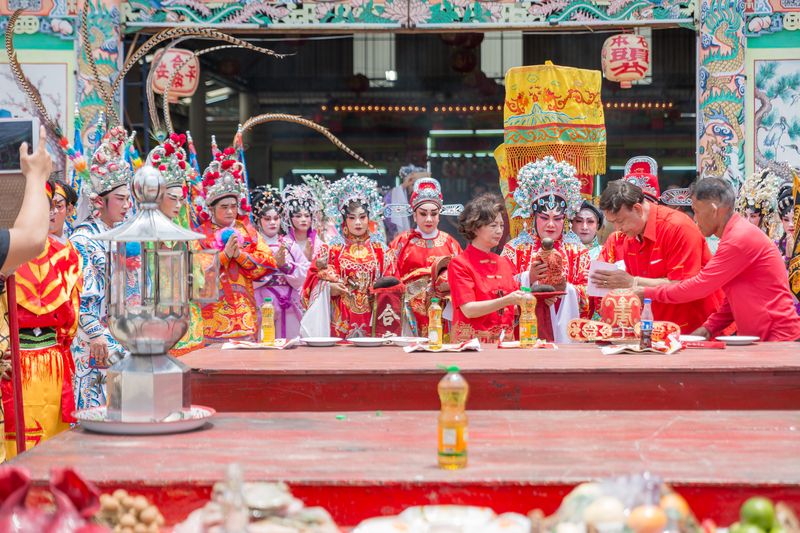
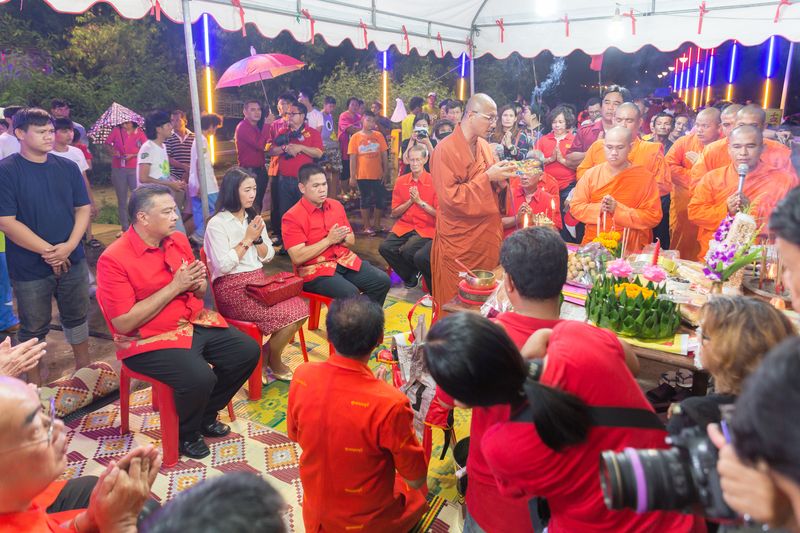
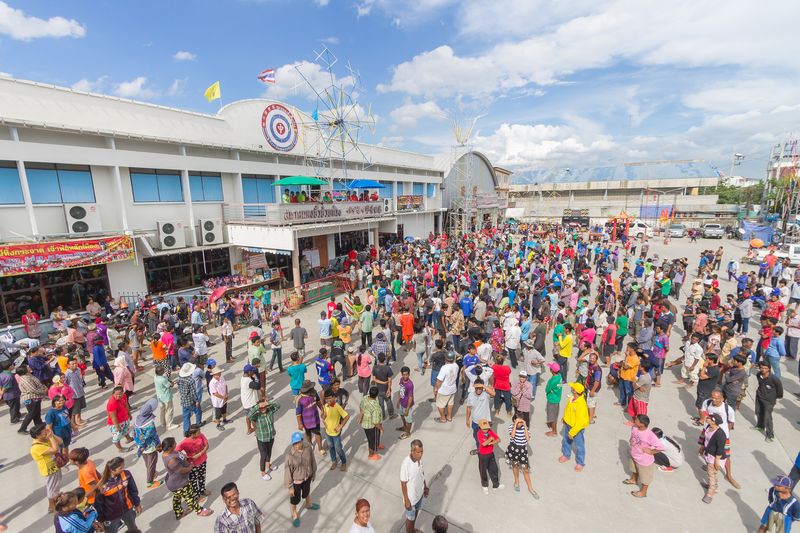
All through the 5 days of the Ting Krajad-Fa, Mahayana monks will chant Kong Tek (Chinese funeral) prayers to delegate the merits to the dead. The important rite is on day three, the day of the Ting Krajad-Fa Food and necessary items, or numbered tally sticks, are thrown from a raised platform in all directions – a random allocation to the poor people who are waiting below. The tallies determine what donated items the people will get.
The Ting Krajad-Din is the same kind of merit-making. The exception is that food and donated things are left on the ground for the benefit of the ghosts.
Next, the reproduction model of the City Guardian is invited back to the Shrine, and the incense urns are also returned to the other shrines by their caretakers.
The Ting Krajad venue used to be moved to a few different places until 1972 when the Tong Hua Huai Khwuang Association was set up and the Tong Ia Siang Tung Foundation Shrine was erected. Since then the venue has been moved to this private property, so have the fair booths and the public entertainment. (Suwanna Kriangkraipetch 2549: 108)
Assistant Professor Suwanna Kriangkraipetch (2549: 108) has the opinion that the Ting Krajad venue had been moved constantly, due to : 1. Quite a vast ground was needed for performing all the important rituals. More spaces were needed too for the market fair booths and the fun performances as well as for the crowd gathering there to get the donations. 2. The ceremony was principally sponsored by the Suphan Buri Chinese community, the townspeople, who would prefer to see it happen in the market or trade area rather than anywhere else. But present-day market area is rather busling with clusters of shops, thus no longer a large open place like before and unsuitable for a large-scale fair. The place around the Chinese Association is a better choice particularly because it is the center of the Chinese community where most townspeople, or the organizers, live.
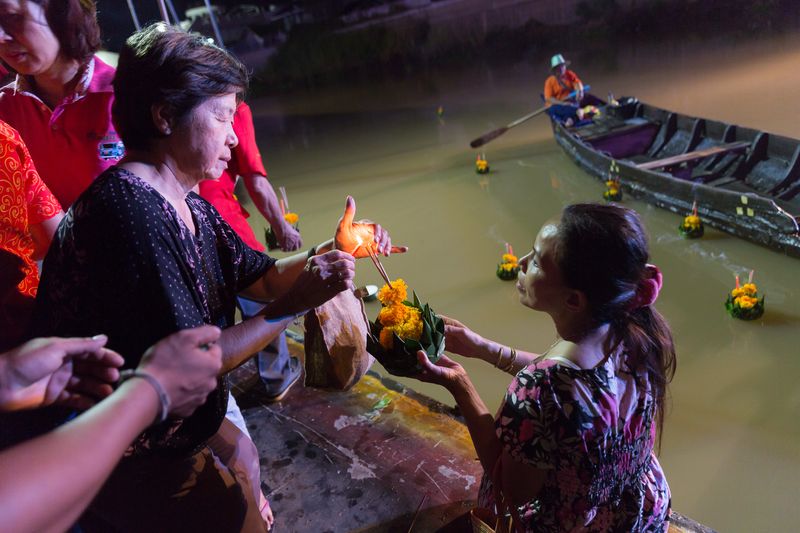
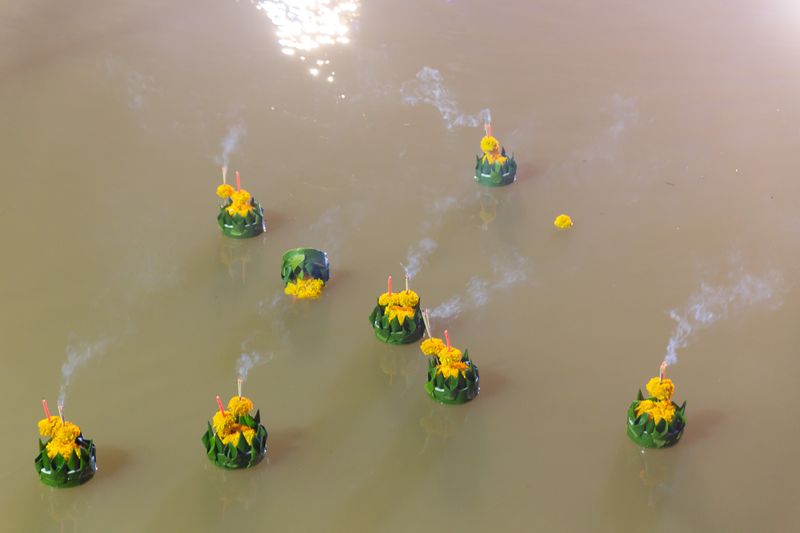
In former time, the Ting Krajad-Fa lasted for 3 days and the Ting Krajad- Din another 3 days. The first day ritual included the City Guardian procession and the ritual of absolving misfortunes by releasing them on water. People coming to the festival were the Suphan Folks and those from neighboring provinces who arrived by boat, as there were no good roads or bridges across the river. The public entertainment – the all-night Chinese opera, Thai opera, film shows, lucky games, including merchandise stalls, were popular. For non-locals, it was also an opportunity to purchase things and take them home. (Boonkhrong Khatathakoon 2016)
An obvious change that has taken place is that the small tradition procession now becomes a really grand, spectacular one. Each year there are more parades, which are organized by more state and private offices from all the provinces around. Public relations work is important. Residents living along the procession route put out in front of their houses tables displaying ritualistic things. They even hold a contest of these offering tables and altars. (In the past, there were no tables in front of the houses, and no contest.) The Ting Krajad time has been moved from after 12.00 to 3.00 p.m. Similarly, the ritual of floating away bad luck is now at 8.00 p.m. instead of the evening time as before. One more notable change is that the rituals are performed by Vietnamese monks instead of Chinese monks, because it is difficult to find some knowledgeable Chinese ones.
Despite the changes that have occurred throughout the years, the essence of the tradition remains the same, that is making devotional offerings by donating things to poor people, living and dead. The tradition fosters among the Suphan people the virtues of piety, kindness, and unselfishness towards the underprivileged. It also helps them maintain the good practice of showing respect to the City’s Sacred Beings which are the center of their faith.
Commission for Document and Archive Compiling (2001). Culture, Historical Evolution, Identity and Local Wisdom of Suphan Buri Province. Bangkok: Department of Fine Arts.
Jittra Kornanthakiat (August 2008). “Si Gow – Ting Krajad, the Soul of the Chinese Ghost Festival.” Weekend Nation 17,846: p.87.
Thavorn Sikkhakosol. (2014) Chinese Festivals and Spiritual Offerings. Bangkok: Matichon.
Barai (pseudonym). (30 august 2015). “Festival of Gratitude.” (online). Thai Rath Online. Accessed on 2 September 2016, from
Boonkrong Khantathakun (interview) (2016). Suphan Buri Municipality, Amphoe Mueang Suphan buri, Suhpan Buri Province.
Buppha Pongpaiboon (composer) (1999). “Ting Krajad: Tradition.” in Thai Culture Encyclopedia, Central Region Vol. 6 Bangkok Thai Culture Encyclopedia Foundation: p 2594.
Prapin Okwayha. (1996). Suphan Buri. Bangkok. Bannakit Trading.
Manas Ophakul. (1983). History and Archeology of Mueang Suphan Buri. Bangkok: Media Enterprise.
Lek-Prapai Wiriyaphan Foundation. (2 February 2016). “Ting Krajad alms for humans or ghosts.” (online). Lek-Prapai Wiriyaphan. Accessed on 2 September 2016, from
Srimahapho. (1998) Chinese Traditions: Wedding, Chinese New Year Festival, Chinese Ghost Festival, Cheng Meng Day, Vegetarian Festival, Ting Krajad Festival, Chinese Funeral, Superstitious Beliefs. Bangkok: Liang Siang Chong Chareon.
Setthapong Chongsa-nguan. (August 2006). “Ulummahasangkhathan Day: Origin of the Ting Krajad.” Arts and Cultures 27,10: p.p. 102-113.
Sor Chompha. (1963). “Our Mahayana Rites.” in The Face of Suphan Buri B.E. 2506. Papers distributed in the 11th Conference of the Buddhist Association of Thailand at Suphan Buri Province on 14-17 November 1963. p.p. 68-70.
Samai Suthidham. (1996). Suphan Buri. Bangkok: Odeon Store.
Office of the National Culture Commission Thailand. (1997). Thai Ways of Life, Our Ancestors. Bangkok: Office of the National Culture Commission Thailand, Ministry of Education.
Suwanna Kriangkraipetch. (October – December 1986) “Ting Krajad Festival: Mahayana Rites at Suphan Buri.” Mueang Boran 14,4: p.p. 128-137.
Suwanna Kriangkraipetch. (2506) “Ting Krajad Festival: Mahayana Rites in Suphan Buri.” in Chang Pa Ton, Khon Suphan. Book distributed in the royally sponsored cremation of Mrs. Nongnuj Kriangkrapetch at Wat Phra Si Mahathat crematory, Bangkhen, Bangkok, on Saturday 27 May 2006. Suphan Buri: mor por phor: p.p. 104-117.